Moving from Seattle to San Francisco: Cost, Housing, Transit & What to Expect in 2026
Over the past few years, I’ve been on quite the adventure. I am a Seattleite through and through, and it’s where my husband Jacob and I call home. We met as students at University of Washington, and bought our first house together in the Central Area of Seattle. Needless to say, we love it in Seattle.
And then…
One day an incredible job opportunity came up for my husband. The job opportunity was just too good to pass up… and that job also happened to be in San Francisco. We’ve always wanted to try living in another city, so we decided to do something that might seem a little crazy to some. We relocated to SF, for a period of time split my time between the Bay Area and Seattle. With support from my amazing Society NW teammate Ian Gordon, I kept working with my buyer and seller clients in Seattle. I would fly back and forth between San Francisco and Seattle, and needless to say, I got to know the SFO and SEA airports really well!
After a while, my husband and I realized our time in San Francisco would be longer than we originally thought. So I embraced the opportunity and really leaned into my expertise:
Helping buyers and sellers relocate between San Francisco and Seattle.
Finding buyers and sellers the best real estate agent anywhere in the country.
Working with buyers and sellers in San Francisco (I got my real estate license in California too.)
A lot of my and Ian’s clients work in the tech industry and move to and from San Francisco and Seattle, and I feel lucky that I’ve been able to add this whole new dimension to my business. It’s been a blast being able to help my clients in both places!
If you’re considering a move to San Francisco, I put together this Q&A-style guide that answers commonly asked questions about moving to SF. And if you have a question about anything else, you can always reach out to me—I love sharing what I’ve learned!
Alrighty, let’s dive in.
How much is housing in San Francisco?
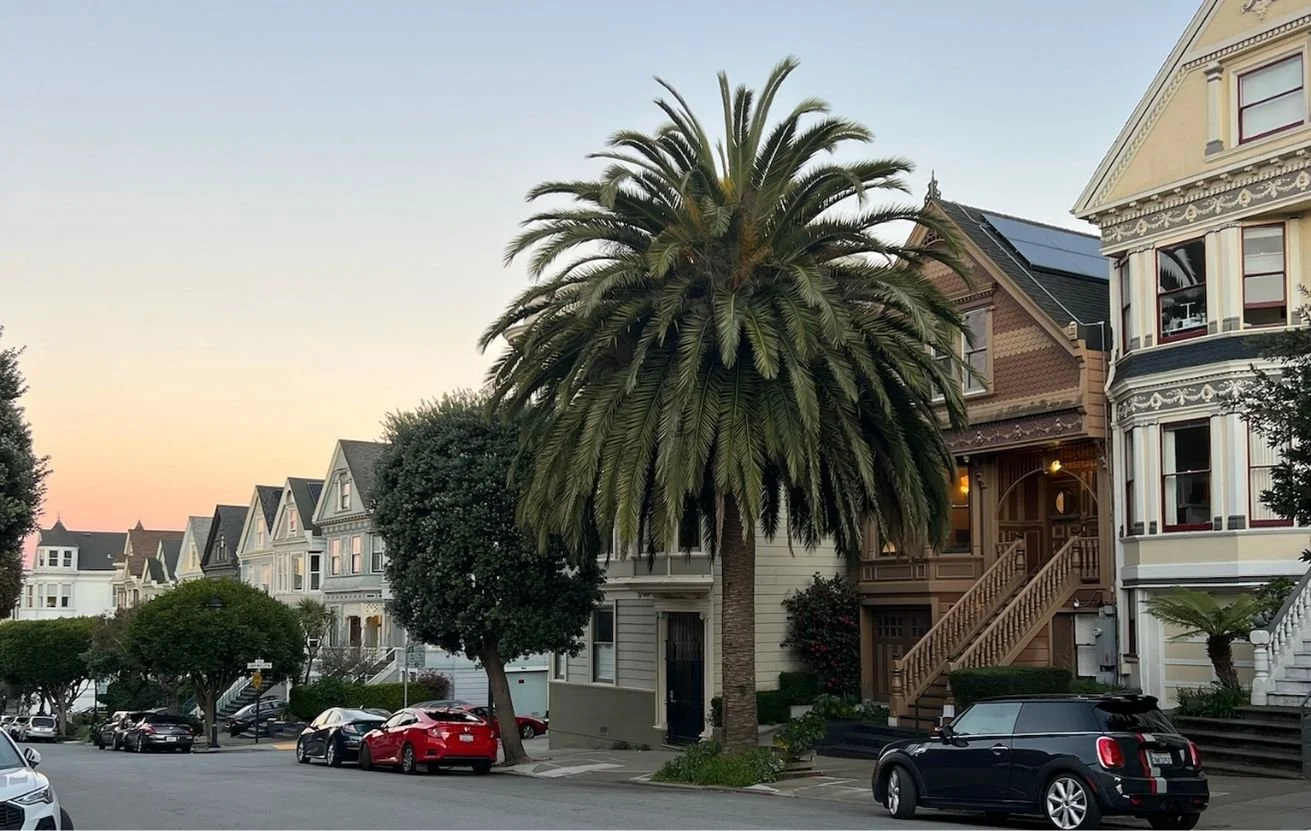
As of May 2026, the average home sale price in San Francisco was $2,216,773, with single-family homes averaging $2,932,574, condos $1,611,245, and TICs $1,350,556 (SFAR MLS).
| Property Type | Average Sales Price |
|---|---|
| Single-family home | $2,932,574 |
| Condo | $1,611,245 |
| Tenancy-in-Common (TIC) | $1,350,556 |
| All home types (average) | $2,216,773 |
As of June 2026, a 2-bedroom condo rents for about $4,800 to $5,100 a month in San Francisco and $2,800 to $3,260 in Seattle, according to Apartments.com.
The “real” answer is that this is incredibly nuanced and varies a lot by housing type, neighborhood, and time of year. And the numbers change from month to month.
Is it better to buy or rent a home in San Francisco?
If you don’t think you’ll be here for more than a few years, my opinion is that renting is the way to go. However, if you do end up buying a home and needing to sell sooner than expected, SF has low inventory, so properties typically sell pretty quickly. You’ll just want to keep in mind that there will be costs associated with selling.
How competitive is the housing market?
This is always fluctuating. If you’re curious, reach out and we can talk through specifics. It really depends on the neighborhood, housing type, and price point.
What neighborhoods in San Francisco are more affordable, but still offer a good commute?
One more affordable options that is still very much IN the city includes Sunset District (both Inner Sunset and Outer Sunset) because there is a Muni line through the neighborhood that makes commuting to FiDi a breeze. Bayview is another more affordable option although it has appreciated rapidly over the last year. If you’re looking for a condo, you’ll want to check out Mission Bay or SoMa for the most affordable options that still keep you close to downtown. That said, if you’re commuting somewhere else in the city or even the Bay Area there are strategic neighborhoods that can be picked to optimize your commute and affordability.
If you’d like to learn more about neighborhoods, check out my blog “Seattle vs. San Francisco Neighborhoods: A Relocation Guide for 2026.”
Do I need to live in San Francisco to get a job there?
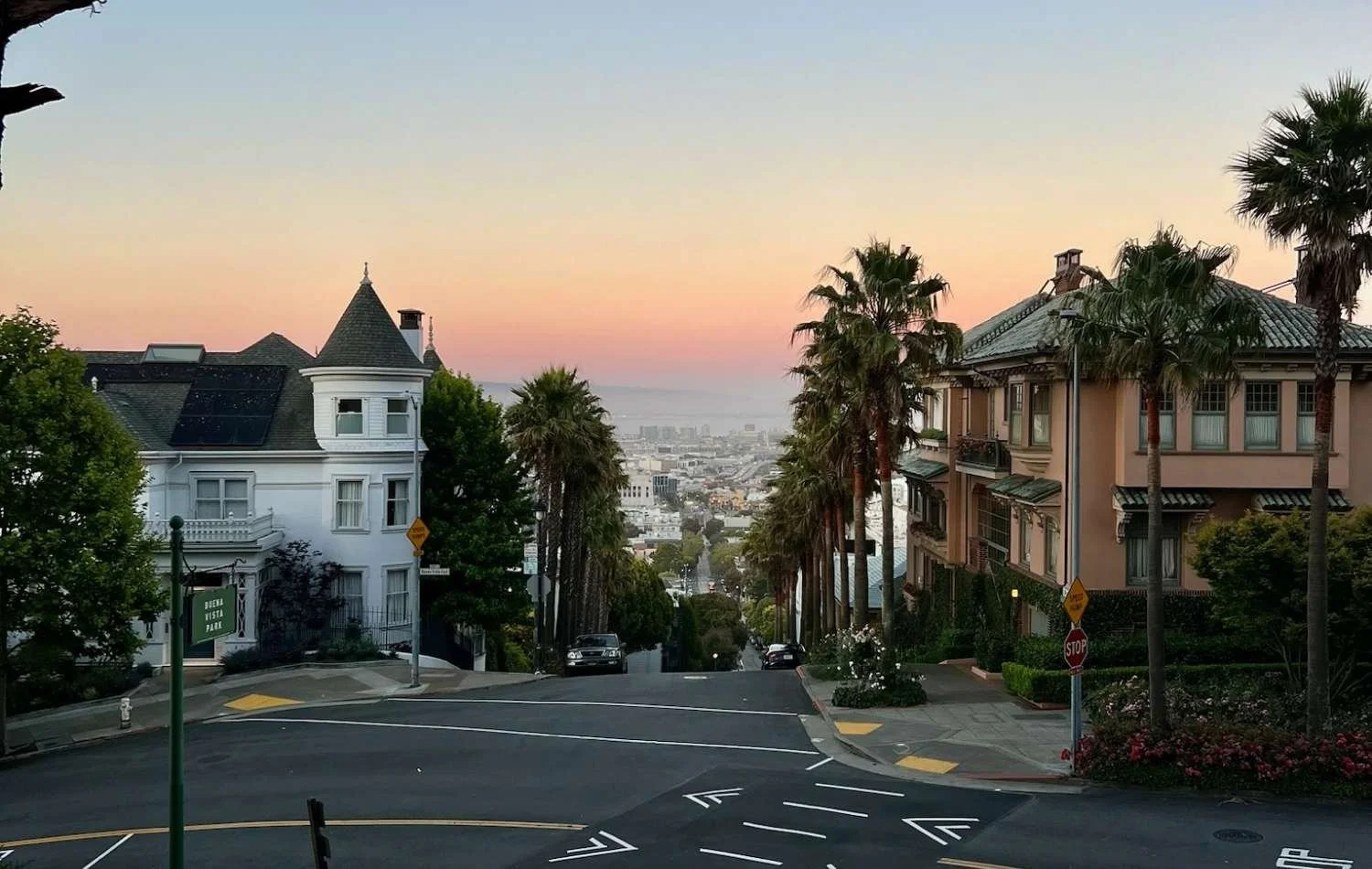
Duboce Avenue View from Buena Vista Park at Sunset
This is a great question. A lot of people want to be able to work at a SF based job but do so remotely, especially because SF has a higher cost of living than a lot of other cities in the U.S.
My husband Jacob works in recruiting in San Francisco, so I’ve learned a lot about that world. One interesting thing is that a lot of companies in SF won’t believe you’ll move to the city for the job if you live elsewhere. So there is a high chance that you’ll need to move to SF before a company will hire you or at least provide evidence that you’re in the process of making a move.
For example, Jacob doesn’t typically hire anyone who lives more than an hour outside the city. If you have a long commute, you may not be a good fit for certain companies that have longer hours than the standard 40-hour work week. However, a lot of companies will pay for you to move to SF, the Peninsula or the South Bay, and many do offer hybrid or remote options. It depends! Just keep in mind that not living in the greater SF area might reduce the number of job opportunities in the city.
How does San Francisco’s job market compare to other cities?
The job market is strong compared to other cities; companies are actively hiring here, and there’s a lot of venture capital money. San Francisco has a thriving start-up scene, but the start-up world comes with a different set of risks. There’s no guarantee your job will stay around for the long-term whether you’re in finance, biotech, tech, etc., but you might be ok with that!
Do I need to own a car in San Francisco?
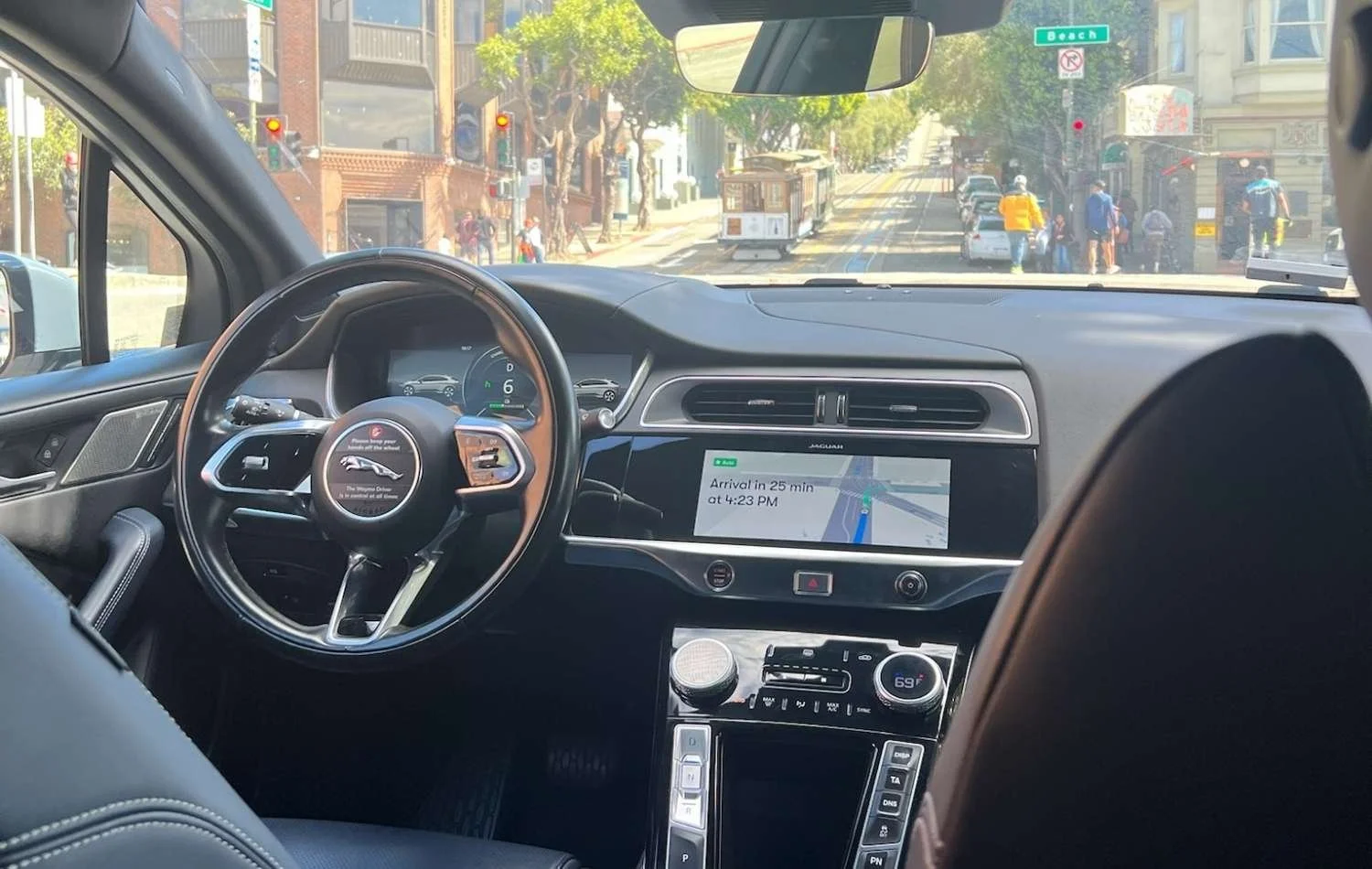
Stress free commuting in a Waymo feels like the ultimate luxury
Based on my own experience, no, you do not need to own a car if you live in San Francisco. Owning a car in the city is expensive!
In Seattle, my husband and I each have a car. But in SF, we are a one car household. We realized that taking Uber, Lyft, driverless Waymo cars, and using public transit was going to be way more economical and suit our needs just fine. (Uber seems to be the most popular rideshare here, with Waymo coming in at a close second.)
In the building I live in, it’s $450+/month for a parking spot. Parking here isn’t cheap. Remember that if you commute to a workplace via car, this means you’ll also need to find a parking garage close to your work as well. So you might end up paying for 2 reserved parking spots.
A lot of people in SF seem to have cars, but they don’t necessarily use them for commuting. They keep them handy for weekends, errands, and trips. I notice that a lot of households in SF are one car households vs Seattle where it’s pretty standard to be a 2 car household.
How reliable is public transportation in San Francisco?
Public transit here is great overall. Maybe it’s a bit less reliable than say Seattle’s Link Light Rail train (which I take to and from the airport in Seattle), but there are so many different public transit options in SF that it’s easy to pivot if a bus is running late, for example.
Like most cities, there is a learning curve to figuring out all of the transit options in San Francisco. From my apartment, I can honestly walk most places I want to go. But I can also hop on a bikeshare, a bus, the Caltrain, or BART. It’s all pretty affordable, and you can just pay on your phone.
What’s the average commute time in San Francisco?
There’s some people who walk 15 minutes to work, and others who take a 2-hour train ride each way (no joke). It varies a ton across the board. If you are considering moving to SF for work, I would really take a close look at where you want to live and what your commute would look like. It can have a huge impact on your quality of life.
Is San Francisco a safe place to live?
As a real estate agent, I’m asked this type of question a lot. The reality is that everyone has a different idea of “safe” and what level of safety they’re comfortable with. I strongly advise not to fall into the fear mongering headlines in the media regarding safety in either city.
I recommend researching safety information about the specific area you live in now vs. the area in SF you’re thinking about moving to. This gives you something to compare. A lot of the time, reading safety-related stats can feel daunting and look like a lot on paper, but think about where you live now and how that compares.
I also always recommend visiting places in person to make your own opinions. I really believe that you need to physically go to a neighborhood or micro-neighborhood or even street to get a feel for it.
When we were deciding where to live in San Francisco, I literally walked 20+ miles a day for 4 days to get a feel for all of the different SF neighborhoods. I wanted to form my own opinions, and this was important for my own mental wellbeing and my family. Not everyone needs to scour the city that much of course, but as a realtor you know I like to do my research! I find it fun and fascinating, and I do neighborhood dating with my real estate clients all the time.
How to Choose the Right Neighborhood in San Francisco

I always test out coffee shops in the neighborhoods I’m considering moving to!
Oh I am so glad you asked! I like to call this process “neighborhood dating.” I love exploring neighborhoods, and scoping out a neighborhood you want to live in is a bit different than simply playing tourist in a new city.
Here are a few of my tips for neighborhood dating:
Visit grocery stores you’ll frequent
If you like to walk your dog, go visit the park you’ll go to most often
Go out for dinner at a nearby restaurant
Walk around the neighborhood
Ride the nearby public transportation
If you think you’ll have a car, rent a car and drive it around on your visit - make sure you have to park it in the neighborhood so you know what that is like especially in peak travel hours
There’s always a learning curve to living in a new place, so these things will take some adjusting. You don’t want to overwhelm yourself too much, but approach this experience through a lens of growth!
I have a couple more great resources about neighborhood dating:
Are there good schools in San Francisco?
This one is really similar to the question I get about safety. Everyone’s definition of a “good” school is so different. You can read online reviews of schools to start your research, and talking to parents with kids at a specific school and visiting the school in person are always smart options. Everyone’s child will also thrive in different environments, so a school that is “good” to one family might not be the right fit for another. I will say that overall, there are some fantastic schools in the SF area and highly rated universities in the greater SF area. San Francisco public schools work on a lottery system so make sure you research that process as well as you’re making your decision.
I spent years as a top-producing agent in Seattle before relocating to San Francisco myself. Now I do both—helping buyers and sellers in San Francisco, and connecting relocating clients with the best agents across the country. If you're making a move, I'd love to be in your corner from day one. Get in touch!
